By Cristina Gamboa, CEO, World Green Building Council
30 June 2026
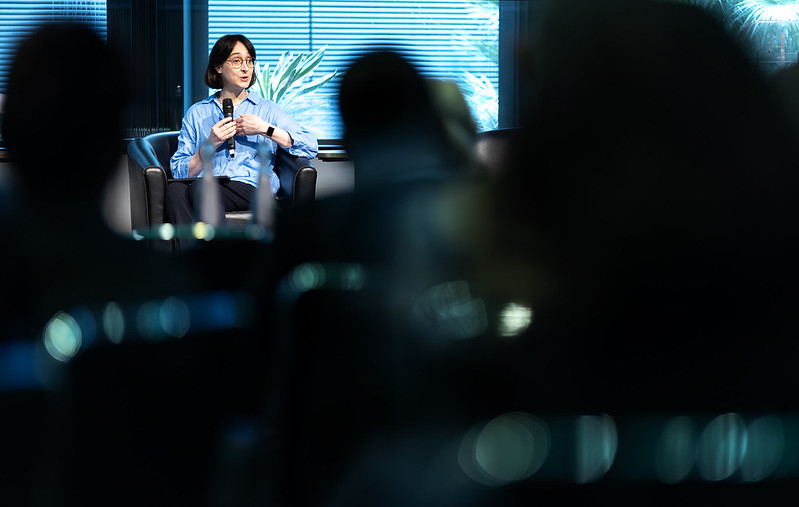
Buildings are on the frontline of the energy transition.
That reality came into sharp focus last week as we convened in London for our biennial WorldGBC Leadership Summit and Global Solutions Forum held in partnership with UKGBC as a flagship event of London Climate Action Week 2026.
The Leadership Summit brought together the Green Building Council (GBC) leaders, CEOs, regional chairs, board members and partners from over 65 countries who make our movement real. These partners are the connective tissue of the transition: the organisations that translate global targets into locally relevant action and hold relationships with governments and industry that make policy tangible.
We convened at a time when we are navigating challenging headwinds: shifting political landscapes, polarisation, a contested sustainability narrative, pressure on science and media, and global emissions still not falling fast enough.
And while the extreme London heatwave tested our collective resilience, what struck me was the urgency with which leaders across finance, policy and industry are prepared to deliver the transition.
The word that kept surfacing across four days of keynotes, panels, fireside conversations and meetings, was “transition” — and it was used deliberately. A transition driven by superior technology and unstoppable market forces, by energy security imperatives that cut across political divides, and by a global network of practitioners who are no longer waiting for permission to act.
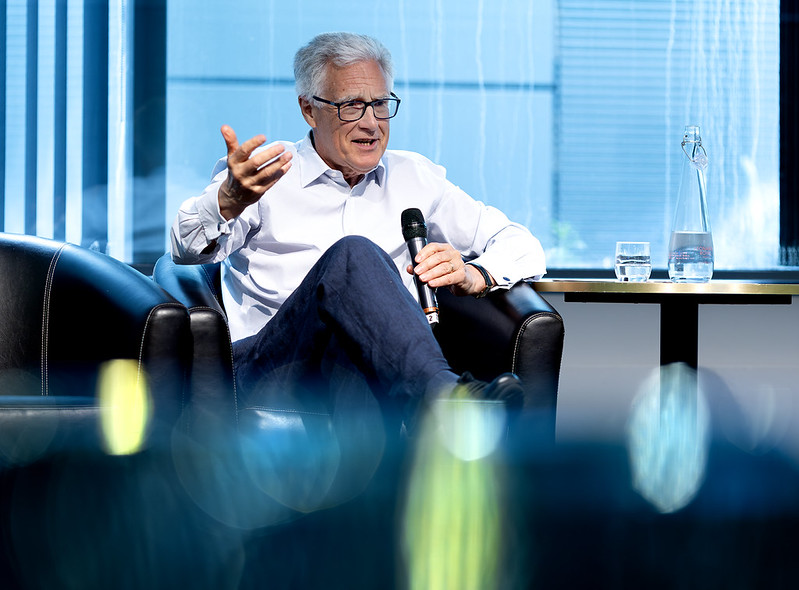
Opening the Global Solutions Forum, Energy Transitions Commission Chair, Lord Adair Turner told the audience the future is electric but what is needed is smart, intelligent electrification: buildings that actively participate in the energy system rather than simply drawing from it, generating power, storing it, shifting demand away from peak hours and contributing to system stability.
With global floor area already reaching 273 billion square metres and projected to grow to 309 billion square metres over the next thirty years — and approximately half of the building stock that will exist in 2050 yet to be constructed — the decisions we make now about how we build, retrofit, heat, cool and power those buildings will shape the energy system for generations. Building more cannot mean emitting more. And renovation of existing buildings must accelerate dramatically.
Speaking on stage with Dave Turk, former US Deputy Secretary of Energy, now Environment Program Director at the Hewlett Foundation and a WorldGBC board member, I was struck by how clearly the energy security dimension has come into focus.
As he set out, the price volatility following COVID, the war in Ukraine, and most recently the conflict in Iran have not just disrupted markets, they have accelerated the shift to electrification in a very real way.
Energy independence, price predictability and resilience across systems, infrastructure and resources are arguments that travel across ideological lines; and they are arguments the built environment is uniquely positioned to deliver.
The economics of electrification are no longer a future proposition. They are here.
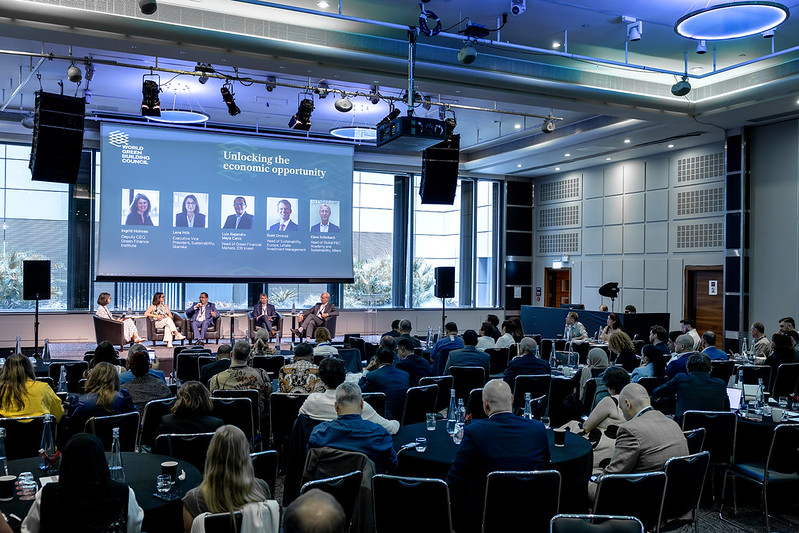
“Sustainability — and by extension decarbonisation — is fundamentally about how we protect and create value.” As Brett Ormrod from LaSalle Investment Management set out, this is the lens that should frame our engagement with the finance community.
It moves the conversation beyond cost and compliance, and firmly into value creation and risk management, language that actually drives investment decisions.
Even modest upfront investment can significantly reduce long-term exposure to risk, reframing sustainable investment not as a premium, but as a rational financial strategy.
The insurance sector has reached the same conclusion. As Klaus Schlobach of Allianz made clear, losses from natural catastrophes have more than doubled every decade since 1980 — and a significant share of those losses remains uninsured.
That is a systemic financial risk and makes a compelling case for resilient, low-carbon investment as the foundation of long-term value.
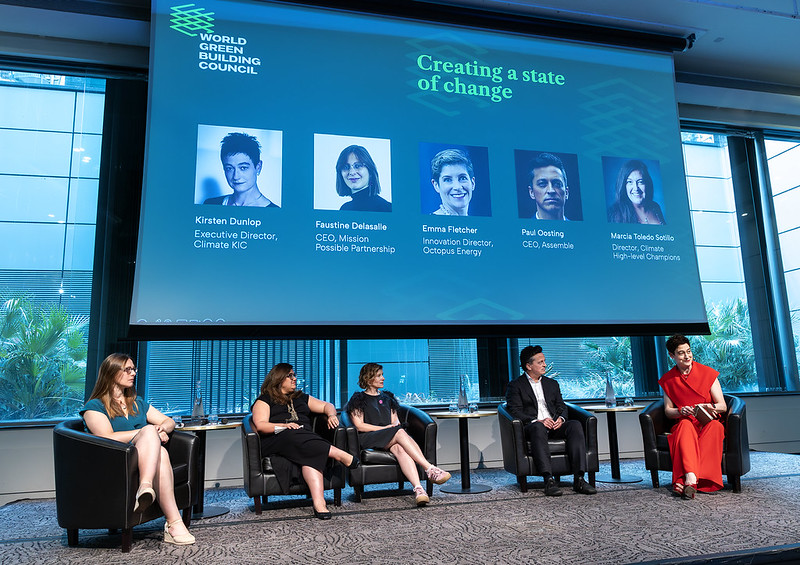
The challenge is no longer convincing people that action is needed. It is building the conditions that make it possible and durable.
Policy without public support does not survive political cycles. Investment without policy stability does not scale. And carbon budgets alone do not build coalitions.
Energy security, affordability, jobs, health and comfort do, and that is consistent across political cycles. These are the arguments that endure.
Policy without the public foundation to sustain it is fragile.
What we need instead is a different dynamic. Emma Fletcher, Innovation Director at Octopus Energy Homes, gave the most concrete example of what getting this right looks like in practice. Octopus does not wait for regulation. They test with real customers, prove what works, and invite government in; and policy follows with the confidence to enable and accelerate that progress.
That is how we move from ambition to delivery.
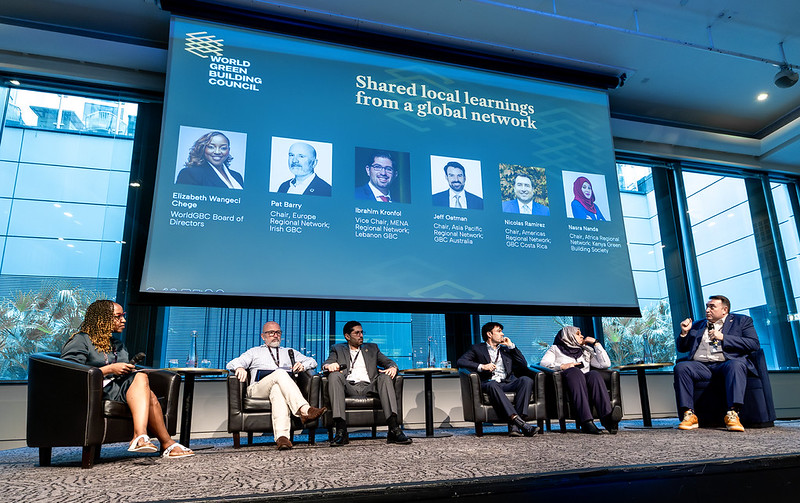
The task ahead is scale — and that is the power of our network.
Across the Leadership Summit, results spoke for themselves. Green Building Councils are the engine of this transition, delivering locally relevant action and working with governments and industry to turn policy into implementation.
The barriers we face are surmountable and our network is evidence of this.
In each case, the pattern is the same: delivery happens locally, and scale follows through policy, markets and networks.
This is the role of WorldGBC — to connect these solutions, amplify what works, and accelerate their adoption globally.
Because the transition will not be delivered through isolated innovation. It will be delivered by scaling what already works — faster, and everywhere.
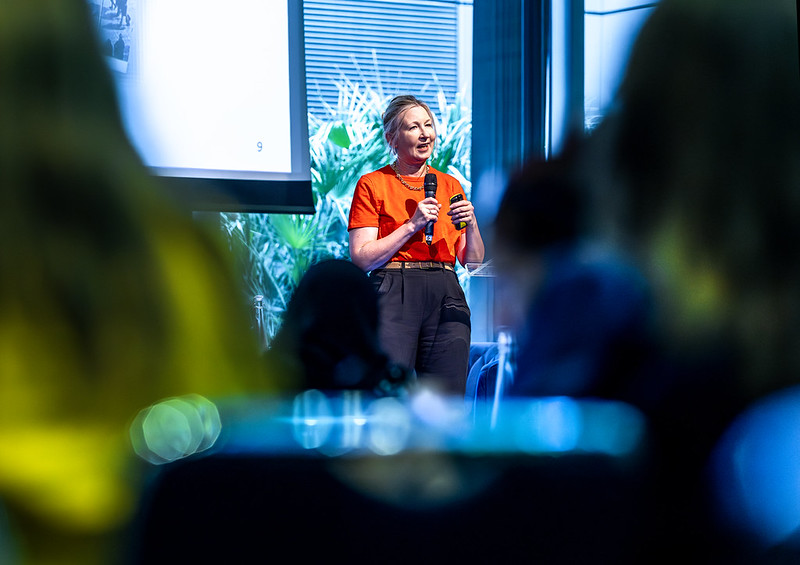
Lindsay Hooper, CEO at University of Cambridge Institute for Sustainability Leadership, closed the Forum with a powerful challenge.
For too long, we have assumed that optimising within the existing system would be enough. It is not.
What is required now is a different kind of leadership — collective, outward-facing, and unafraid to be bold. Leadership that builds markets, shapes policy, and moves the middle.
It echoed something Dave Turk had said earlier in the day: the transition will only happen if people choose to step up and be part of the solution.
That is exactly what we saw across the Leadership Summit and Global Solutions Forum.
I want to close by thanking everyone who joined us across the four days — our remarkable GBCs and regional chairs, our Corporate Advisory Board and Board of Directors, the speakers, partners, delegates, and the WorldGBC team who brought such depth and generosity to every conversation. A particular thanks to our sponsors Arup, Sidara, City Developments Limited, Swire Properties and UK Green Building Council (UKGBC) and philanthropic supporters Ikea Foundation and Laudes Foundation whose support made the week possible.
From every corner of the world, you showed up.
Now let’s get to work.