September 2026

A just transition involves moving towards environmentally sustainable economies that enable society to thrive within planetary boundaries while avoiding negative impacts on workers, communities, and countries. It ensures that the benefits of this transition are shared fairly and equitably, and that the associated costs do not disproportionately burden groups that have historically been excluded or marginalised.
Fundamentally, a just transition is grounded in human rights. Respect for, protection of, and fulfilment of human rights should form the basis of all transition efforts. This means safeguarding the dignity, health, safety, livelihoods, and opportunities of workers and communities throughout the shift to a low-carbon and resilient economy.
Applying these principles in practice is particularly important in the built environment sector. The transition to a low-carbon, resilient, and resource-efficient built environment is reshaping jobs, skill demands, supply chains, and local economies. This transformation includes the electrification of buildings and the phase-out of fossil fuel use, the retrofit of existing buildings, more efficient and circular construction practices, and the wider adoption of low-carbon materials.
While these changes present significant opportunities, they also carry risks, including workers being left behind without access to reskilling and upskilling opportunities, economic disruption for affected communities, and widening inequities if the benefits and costs of the transition are not shared fairly and equitably.
A just transition provides a framework for managing these risks by ensuring that workers, communities, and businesses can actively participate in and benefit from the transformation, while upholding the human rights principles at its core.
Several established frameworks provide guidance on implementing a just transition. Together, these resources help organisations translate just transition principles into business strategy, decision-making, and climate action. These include:
These frameworks are increasingly complemented by practical implementation tools and sector-specific guidance. Examples include:
Across these frameworks, a common set of principles emerges, including, but not limited to, social dialogue, equity, decent work, respect for human rights, and a commitment to leaving no one behind.
In practice, these principles can be translated into actions such as reskilling and redeploying workers, protecting labour and human rights, engaging affected communities in decision-making, supporting local economic resilience, and ensuring that the transition delivers healthy and sustainable buildings for all.
In line with the four scopes of WorldGBC’s Social Impact Framework, a just transition protects and enhances outcomes for people across the value chain, from building occupants and local communities to construction and supply chain workers.
Organisations seeking to put these principles into practice can also connect with their national Green Building Council. As part of WorldGBC’s global network of over 80 Green Building Councils, they offer guidance, tools, and connections to key stakeholders working to advance a just transition within their own markets and contexts.
The built environment accounts for 37% of global CO2 emissions, nearly half of materials extraction and employs around 9% of the global workforce. As a result, the sector has significant influence over both environmental and social outcomes and, with that influence, a responsibility to respect and uphold the rights of all those affected by its activities.
If the transition to a low-carbon, resilient, and resource-efficient built environment is not managed fairly, it risks exacerbating existing inequalities rather than addressing them.
This transition is taking place against a backdrop of significant workforce challenges. Many construction markets are already experiencing labour and skills shortages, while demand continues to grow for expertise in areas such as building retrofits, electrification, low-carbon materials, circular construction, and climate resilience.
Retrofitting alone could create around 1.3 million jobs globally by 2030. However, many countries already face shortages of insulation, HVAC, energy auditing, and electrical skills needed to deliver this work. Meeting this demand will require sustained investment in jobs, skills, and workforce development, including reskilling and upskilling programmes, accredited training pathways, and decent working conditions. When delivered effectively, these measures can help close persistent skills gaps while contributing to a more resilient, productive, and satisfied workforce.
Business leaders that act now have the opportunity to tackle these risks head-on, address historical and structural injustices, and generate and preserve value through greater access to investment, including growing pools of impact capital directed at climate and social outcomes, stronger financial performance, and the mitigation of reputational and operational risk.
While the moral argument for a just transition is well established, implementation across the built environment has not kept pace. The World Benchmarking Alliance highlights a significant gap in how companies are integrating social equity, inclusivity and workers’ rights into their climate transition plans, with just 5% of those assessed doing so, indicating that just transition principles are not yet embedded at the scale required.
Complementing the moral imperative with demonstrable business value is another compelling way to accelerate implementation and mainstream it into business decision-making. Focusing on the just transition can help secure organisations’ future progress as it encompasses planning for and mitigating climate and societal risks, while also helping to support business resilience, reputation and profile. As a core component of a climate transition action plan, a just transition is also increasingly expected by investors and other stakeholders.
Policy is also key to creating a just transition. We are seeing shifts and further integration of social issues into climate strategy, international, national and local policies, regulations and building codes. Over 90% of countries that have submitted third-generation climate action plans or Nationally Determined Contributions (NDCs) under the Paris Agreement now include just transition principles, recognising the need to protect workers and vulnerable communities as economies decarbonise. Globally, the UAE Just Transition Work Programme, advancing under the UNFCCC framework, is also advancing dialogues on just transition pathways, with a dedicated just transition mechanism now in development.
These are clear signals that just transition is now becoming an integral part of the global climate agenda, and one that businesses will increasingly need to engage with.
However, supportive policy remains uneven, and not all governments are setting the conditions needed to drive change at the pace required. A combination of public and private sector action is therefore critical. Through the work of the private sector, implementation can become normalised into practice, giving policymakers confidence that stronger regulation is feasible, derisking further implementation and driving the market forward. These policies, in turn, give businesses a clear signal to scale solutions more rapidly.
Embedding just transition principles into how businesses operate also adds value to companies in the built environment value chain that leads to greater resilience and profitability, while enhancing the communities and places around them.
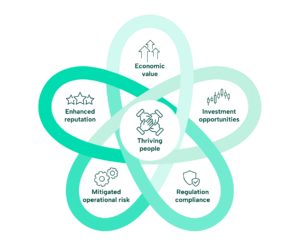

Embedding just transition principles can generate tangible economic value. The United Nations Development Programme’s five-year analysis of 235 global firms found that the investment to improve corporate human rights frequently led to financial benefit, including a direct link between human rights improvements and return on assets, more resilient supply chains and a more productive workforce.
At asset level, the returns are equally clear. Community-focused projects and developments can result in higher occupancy rates, stronger tenant satisfaction and long-term asset appreciation. Research from the Institute for Human Rights and Business (IHRB) finds that projects incorporating approaches such as retrofitting poorly performing housing, providing a mix of homes to meet local demographics and engaging residents in decision making can improve environmental and social outcomes while remaining profitable by delivering stable long-term returns.
The benefits extend beyond individual assets too. Owner occupiers and tenants of low-carbon properties benefit from lower energy bills, generating higher disposable income that flows back into the local economy. More broadly, channelling investment towards social equity and into historically underserved areas can build long-term value by unlocking new market opportunities, redirecting capital to community-based enterprises and mobilising untapped human and social potential.
These outcomes can strengthen a company’s investment case and support the rationale for enabling regulatory and policy frameworks, creating a reinforcing cycle of economic value for the business, its supply chain, workforce and local community.

Businesses across the built environment that prioritise social outcomes are better placed to compete by helping unlock fiscal incentives, policy support and ESG linked capital that reduce risk and improve access to favourable financing. Investors, including pension and sovereign wealth funds, increasingly favour companies addressing both climate and social equity, while projects that combine decarbonisation with outcomes such as affordability, workforce development and community benefit are more likely to attract private and public funding.
Some commercial banks provide technical and advisory services to help companies structure financing plans for sustainable projects, demonstrating the financial sector’s increasing participation in the just transition.
This is reinforced by a shifting policy landscape, with instruments such as the European Union’s Social Climate Fund and Just Transition Mechanism opening up new funding streams for green energy and skills development to support communities affected by industrial transition. Meanwhile, instruments such as The Social Price of Carbon for Public Infrastructure in Chile are incentivising low-carbon construction and materials.

Human rights and other just transition considerations are increasingly being integrated into policy, taxonomies and disclosure frameworks across multiple geographies. The businesses best placed to meet these requirements, and anticipate changes, are those with just transition principles embedded in their strategy.
The frameworks previously introduced, including the UN’s Guiding Principles for Just Transition and the ILO’s Guidelines for a Just Transition, are already shaping national policy, with countries including South Africa and several ASEAN states looking to integrate just transition considerations into domestic regulation.
Voluntary and mandatory climate disclosures are also seeing a shift from a heavy focus on climate considerations to integrate the social dimensions, such as the European Sustainability Reporting Standards (ESRS).
This reflects a growing recognition that businesses, policymakers and workers must collaborate to overcome barriers to a just transition.

Businesses that embed just transition principles such as early, comprehensive and open community engagement are significantly better placed to avoid conflict, public pushback and project delays. Meaningful dialogue builds trust, and community partnerships can improve outcomes for local residents, which helps to keep projects on schedule, resulting in cost savings and improved return on investment (ROI).
Integrating just transition principles into business practice can therefore help to mitigate project risk, protect project viability, reduce exposure to disruption and strengthen the commercial case for investment. Furthermore, a company that can demonstrate that its project is enabling a just transition may benefit from streamlined planning permission. It may also open up wider funding opportunities linked to social impact and development objectives.

From small and medium sized enterprises (SMEs) to multinational corporations, companies trade on their reputation. 75% of investors interviewed in research from the Urban Land Institute (ULI) identified public pressure and reputational benefits as the largest market driver behind growth in social value and social impact activity, underscoring that reputational risks are not a minor consideration but a commercial one.
Movements like Design for Freedom are increasingly shining light on unjust practices within the sector, creating a notable reputational risk for organisations that have not investigated supply chain practices or wider community impacts.
A company that can demonstrate progress towards a verifiable just transition across all aspects of its business, from its supply chain and customer relationships to workforce wellbeing, community engagement and environmental stewardship, is likely to strengthen its overall credibility and market position. This can enhance its attractiveness to partners, investors, employees and customers, boost brand image, and support the development of long-term relationships built on trust and shared value.

The building and construction sector’s labour and skills shortages can significantly impact company resources and performance. When ethical labour standards and equitable workforce development, including reskilling and upskilling, are core principles of a company’s strategy, the result is often more satisfied, healthier, loyal employees who are more productive, and feel invested in the company for the long-term.
As climate impacts become more frequent and severe, a just transition requires companies to support workforce resilience by protecting construction workers from extreme heat and other climate-related risks. This can reduce disruption to supply chains, strengthen business continuity and help maintain a competitive advantage as conditions change. Companies who protect their workers in this way are likely to be more attractive to a new generation of workers, enabling businesses to hire and retain talent and reduce staffing and HR costs.
When companies pay their staff a fair living wage and support their wellbeing, they also help to build a more prosperous, resilient environment in which enterprise and society can thrive. Companies can also require their supply chains to adopt similar recruitment policies and contribute to building more resilient, reliable supply chains.
Location: La Guajira, Colombia
Lead actors: Casa Para Mí, an initiative of Cementos Argos
Miirokú delivers community‑led, climate‑resilient housing for Wayuu families devastated by Hurricane Julia in 2022. Co‑designed with the community and local leaders, this CASA Colombia-certified project delivered 30 homes using rainwater harvesting, solar energy, clean cookstoves, and bioclimatic design that lowers indoor temperatures by 2–4°C.
The project employs a hybrid system that blends steel framing with traditional earthen construction techniques using modernised fibres like “bahareque” and “yotojoro”, uniting ancestral knowledge with scalable technology.
Wayuu women actively shaped the design, which incorporates local ways of living such as hammocks, outdoor kitchens, ethnic patterns incorporated into the façades and shaded communal spaces (enramadas). Meanwhile, community authorities, through the Dignidad Wayuu Association, managed labour and logistics.
With 70% of materials sourced regionally and 135 community members participating in construction processes, the project´s budget delivered more built area than traditional construction, proving climate-resilient housing can drive inclusion, local development and community ownership. See the three-part documentary (Part 1, 2 & 3).

Location: London, United Kingdom
Lead actors: Multiplex
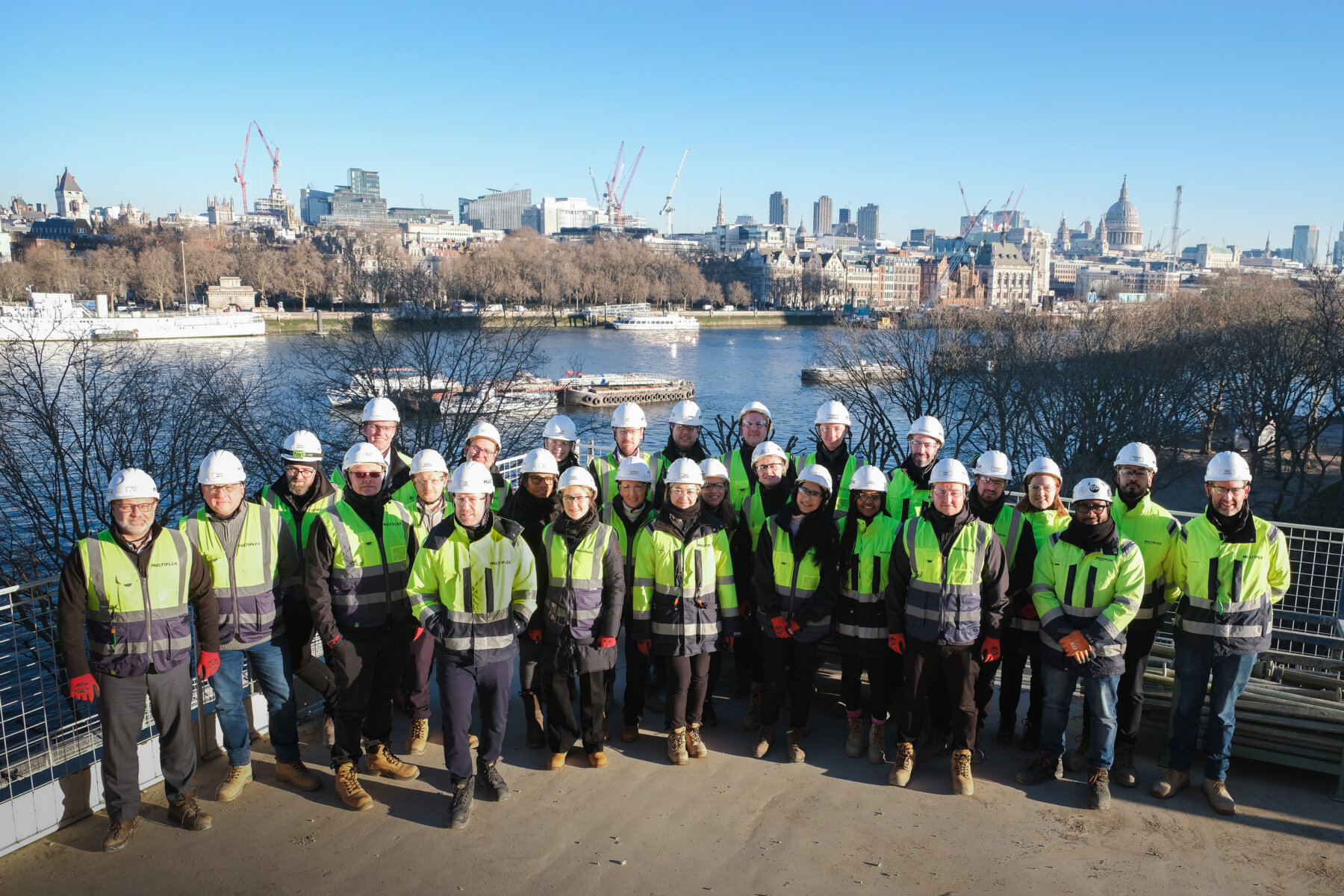
The 76 Southbank development in Lambeth, London, embedded just transition principles throughout the construction phase, ensuring that the benefits of investment were shared with local communities. Delivered in just 19 months, the development demonstrates how major construction projects can deliver meaningful social value alongside environmental performance.
The project created 99 jobs for local residents, with targeted support for individuals who were not in education, employment or training (NEET), neurodivergent or facing significant barriers to employment. Ethical labour standards included mandatory payment of the London Living Wage, a prohibition on zero-hour contracts and bi-annual independent workforce audits.
Over £7.7 million was directed to Lambeth-based SMEs, while 17 educational engagement sessions reached 362 students. The project also delivered 379 volunteering hours and raised £28,702 for local charities.
Location: Catalonia, Spain
Lead actors: Barcelona City Council and regional government, Sostre Cívic, Grupo Salas, Ariston, citizen led cooperatives and non-profit housing associations, European Investment Bank, Council of Europe Development Bank, NextGenerationEU, ELENA, aligned banks and crowdlending platforms
Catalonia is confronting a housing and energy‑poverty crisis, with Barcelona rents up 68% in a decade and 80% of homes energy‑inefficient. From a wider perspective just 2% of Spain’s housing stock is classed as affordable housing versus 9% EU‑wide.
In response, public bodies, cooperatives, associations and developers are creating innovative public-private-social partnerships to deliver affordable, low‑carbon homes while rebuilding a construction sector that lost 64% of its workforce after the 2008 financial crisis.
Social enterprise Projectes Mansol trains excluded workers, and the developer Grupo Salas accepts returns of 4–6% which is below the typical rate in exchange for 100% occupancy and long waiting lists. Residents now spend under 10% of income on utilities (down from 20%+), and each €1 spent on retrofits saves €2.30 in health and energy costs.
Location: Malaysia
Lead actors: Malaysia Green Building Council (malaysiaGBC), with support from Malaysia’s Ministry of Natural Resources and Environmental Sustainability (NRES), Ministry of Education (MOE) and the Kuala Lumpur Federal Territory Education Department; technical support from IEN Consultants; and international funding support from the Ministry of Foreign Affairs of Denmark and the UNDP GEF Small Grants Programme.
Program Sekolah Hijau Kebangsaan is developing a scalable national framework for transforming Malaysia’s existing schools into healthier, more comfortable and climate-resilient learning environments.
The programme places students and teachers at the centre of school retrofit decisions, recognising that improvements to thermal comfort, ventilation, daylight and indoor environmental quality can strengthen both climate resilience and the quality of the learning environment.
Beginning with detailed assessments of ten schools in Kuala Lumpur, the programme examines thermal comfort, ventilation, indoor environmental quality, energy use and carbon performance to identify practical, cost-effective interventions that can be replicated across the wider public-school portfolio.
Its approach prioritises improving building performance through passive design and demand reduction first, optimising building systems where needed and integrating renewable energy. By establishing measurable performance baselines and a repeatable retrofit methodology, the programme aims to help government direct investment towards interventions that deliver the greatest benefits for students, teachers, climate resilience and carbon reduction.

Location: Basque Country, Spain
Lead actors: Basque Government, GBCE, Municipal Housing of Bilbao, Basque Energy Agency, University of the Basque Country, EDE Foundation, BUILD:INN, GAIA, Aclima, GNE Finance, Cíclica, Zabala, Gabineteseis, FEDARENE, developed under the EU funded projects HIROS4ALL and BIRTUOSS
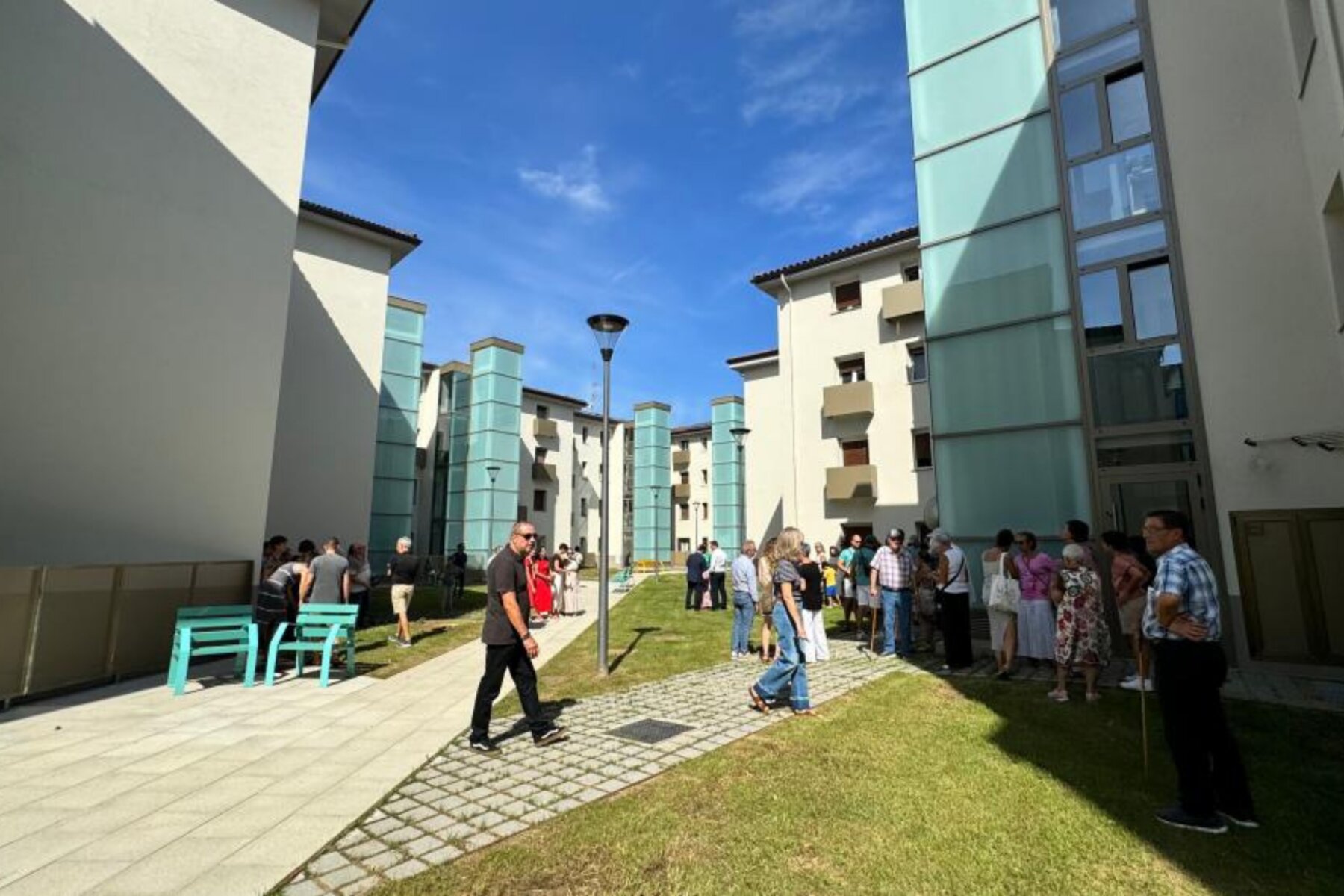
Opengela shows how a one-stop shop model can deliver a just transition in vulnerable neighbourhoods. The model embeds neighbourhood offices in each community, offering free technical, financial and legal advice for building renovation while coordinating with local health, social and employment services to address household needs. Public subsidies of up to 100%, combined with bank credits where available, financed vulnerable residents, alongside innovative financing arrangements.
Up to €176 million was mobilised, creating jobs and improving resident comfort, with 81% reporting satisfaction with the programme. This demonstrates that people-centred renovation with inclusive financing delivers measurable social and environmental benefits while supporting local economies.
A total of 27 offices throughout the region have been set up, resulting in the renovation of 2,125 homes, saving 25.5 GWh annually and cutting CO2 emissions by 62%.
Location: Guayaquil, Ecuador
Lead actors: Holcim, Ambiensa
Mundo Ambiensa is set to become Latin America’s largest social housing project, responding to rapid urbanisation in Guayaquil. Through a ten-year partnership between developer Ambiensa and Holcim Ecuador, more than 45 developments will deliver 35,000 homes for around 180,000 people by 2030.
Each home is designed with residents’ wellbeing in mind, maximising natural light to reduce electricity use, with wider developments including sports, health and educational facilities. Construction exclusively uses ECOPact, a low-carbon concrete range cutting embodied carbon by at least 30%.
By October 2024, the 6,000th home had been handed over, showing how pairing social housing at scale with lower-carbon materials can support more equitable urban growth in fast-urbanising regions.
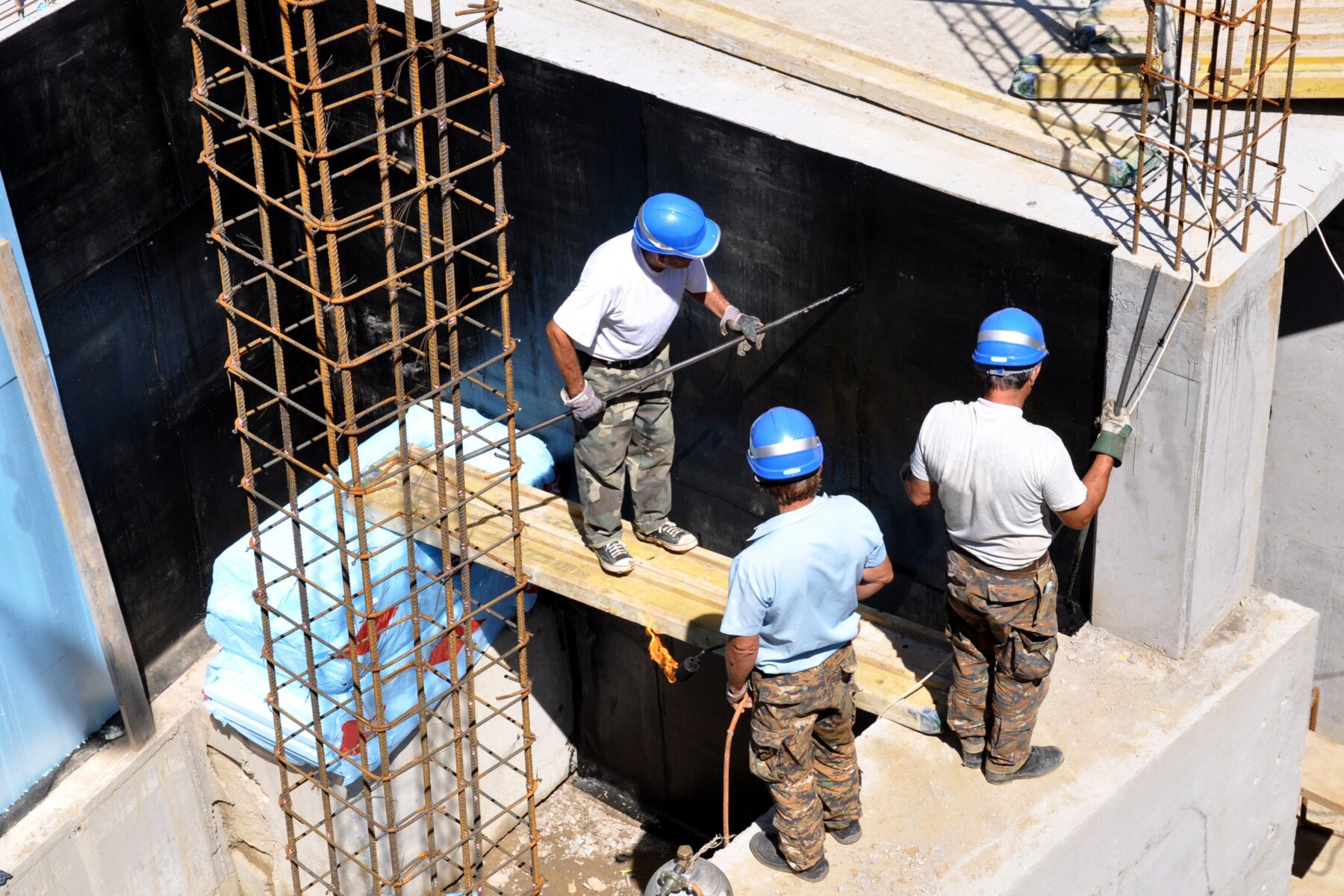
Mainstream implementation depends on the whole value chain moving together. Businesses following and implementing actions from recognised guidelines, policymakers setting enabling conditions, and workers and communities shaping decisions each reinforce the others, turning isolated good practice into the market norm. As this collective effort scales, a just transition shifts from ambition to standard business practice across the built environment.
The World Green Building Council and its network supports this shift by providing practical guidance, showcasing leading practice and fostering collaboration across the value chain. Together, industry, government and communities can ensure the transition to a sustainable built environment delivers lasting value for businesses, workers, communities and the planet.